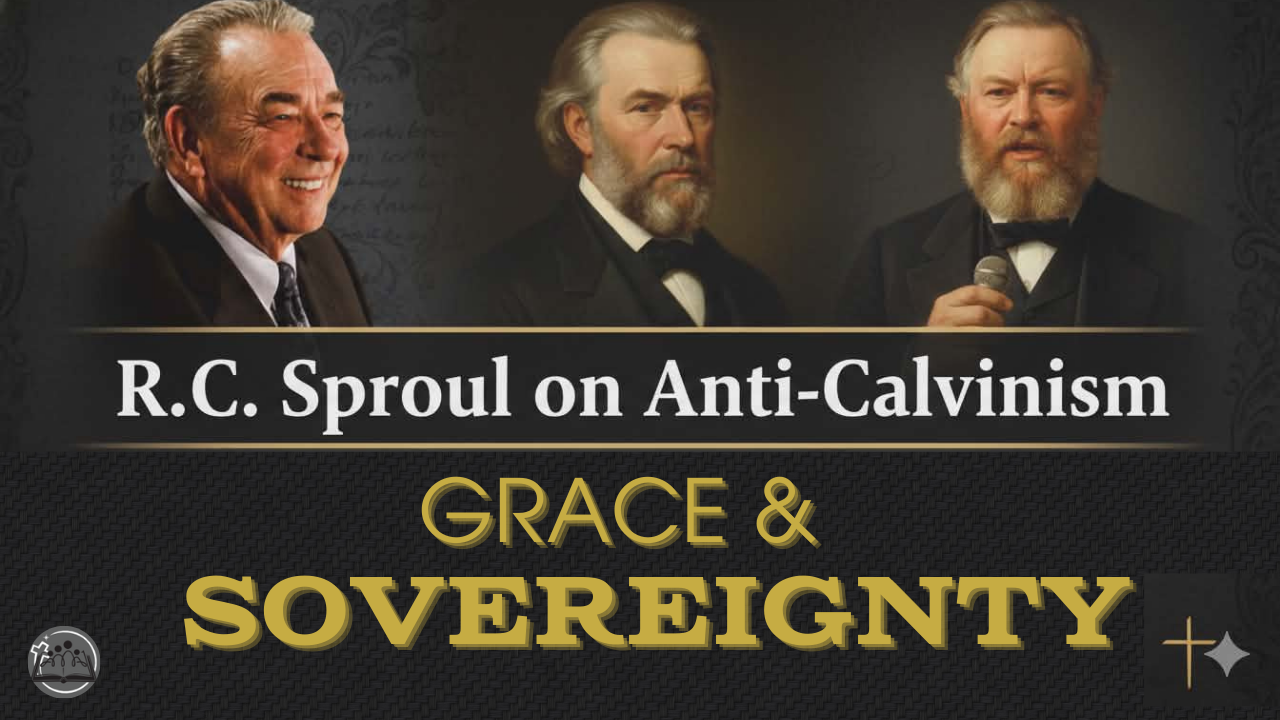
Why People Often Misunderstand Calvinism: Insights from R.C. Sproul
It’s a common phenomenon in the theological world: many of the loudest critics of Calvinism are often reacting to a version of it that doesn’t actually exist.
The late R.C. Sproul frequently noted this disconnect, famously observing that once the “caricatures” are stripped away, the biblical foundations of Reformed theology become much harder to ignore.
—
1. The Real Issue: God’s Sovereignty
Too often, the “Calvinism vs. Arminianism” debate is dismissed as a petty theological squabble. But Sproul insisted the stakes are far higher. In his seminal work *Chosen by God*, he wrote:
“The issue ultimately is not Calvinism versus Arminianism. The issue is whether God is sovereign.”
Resistance to Calvinism often arises not from faulty logic, but from discomfort with Scripture presenting a God who is truly in control of salvation—free to show mercy exactly where He wills (Romans 9).
—
2. Grace vs. Fairness
One of the most frequent objections to Reformed theology is that it “isn’t fair.” Sproul’s response was characteristically blunt:
“If God were fair, nobody would be saved.”
If we received “fairness” from a holy God, we would receive judgment. Calvinism emphasizes that salvation is not about justice (getting what we deserve), but about mercy (not getting what we deserve) and grace (receiving what we do not deserve).
—
3. A Theology That Humbles
True Calvinism leaves no room for spiritual pride. If the only reason you believe is that God, in His mercy, first acted upon your soul, then boasting is excluded entirely. As Paul writes in Romans 3:27:
“Where then is boasting? It is excluded.”
—
4. Voices from the Tradition
The “Doctrines of Grace” have long been seen as the very heart of the Gospel by pillars of the faith:
– Charles Spurgeon: “I have my own private opinion that there is no such thing as preaching Christ and Him crucified unless we preach what nowadays is called Calvinism.”
– J.I. Packer: “Calvinism is not a special brand of Christianity; it is Christianity in its purest and most biblical form.”
– John Calvin: “We are not to seek assurance of election anywhere else than in Christ.”
—
5. What Calvinism is *Not*
To rightly understand the Reformed tradition, we must clear away the myths. Biblical Calvinism:
– Does **not** deny the universal gospel call to all people.
– Does **not** teach that salvation depends on having the “right” theology or labels.
– Does **not** promote fatalism or discourage evangelism.
– Affirms that “Salvation belongs to the Lord” (Jonah 2:9).
—
Final Thought
As R.C. Sproul often reminded his students, the goal of theology isn’t to win arguments—it’s to lead us to worship. When we realize that our salvation rests entirely on God’s sovereign grace, our only response is *Soli Deo Gloria*—to God alone be the glory.
—
Join the Conversation ✝️
Theological study is best done in community. Share your thoughts in the comments below:
– **The Sovereignty Shift:** Before studying Reformed theology, did you view God’s sovereignty differently? What changed?
– **The Fairness Factor:** Why do you think human nature struggles so much with the idea that “fairness” would mean judgment for all?
– **Misconceptions:** What is one common myth about Calvinism you used to believe—or one you hear most often today?