MINISTRY LOGIN

Please re-authenticate to sync your Church History stats.

Choose What to Study

CHURCH HISTORY TIMELINE

Review these historical milestones before playing!

THE SEVEN CHURCHES

Seven Churches

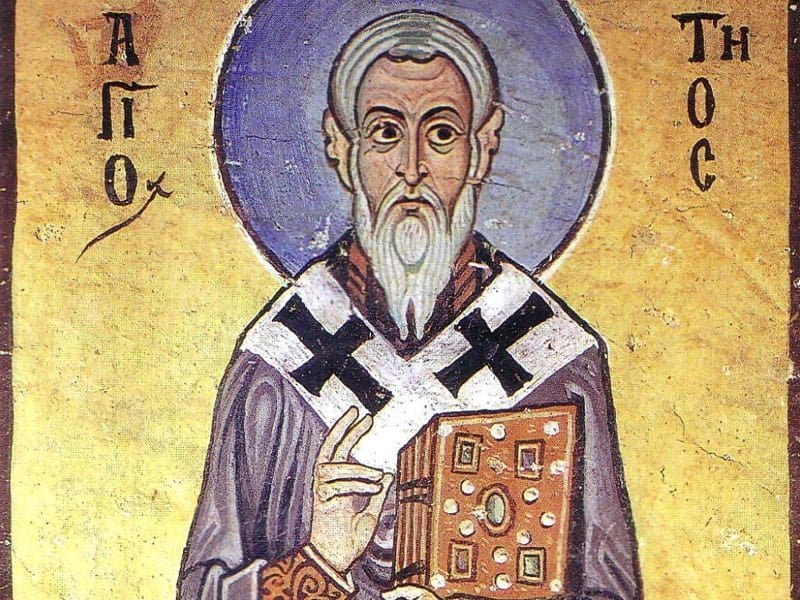
Who was Ignatius?

Ignatius was bishop of Antioch, one of the most important early Christian centers. Antioch is also the place where believers were first called “Christians” (Acts 11:26). Tradition says Ignatius may have personally known apostles or apostolic disciples, especially John the Apostle or those connected to him.

Under the Roman emperor Trajan, Ignatius was arrested and sentenced to death. While traveling to Rome to face martyrdom in the arena, he wrote letters to encourage churches and defend orthodox Christian teaching.

What are the “seven churches”?

Ignatius wrote seven main letters that survived:

These were churches in Asia Minor (modern Turkey), except the letter to Rome and the personal letter to Polycarp.

What were the letters about?

1. Unity of the church
Ignatius strongly urged believers to stay united and avoid divisions. One of his famous ideas was that Christians should gather around their bishop, elders, and deacons in unity. He saw church division as spiritually dangerous.
He wrote things like: “Where the bishop appears, there let the people be.” This shows the early church already had organized leadership structures very early in Christian history.

2. Fighting false teachings
Ignatius was especially concerned about heresies, particularly something later called Docetism. Docetists claimed Jesus only “appeared” to be human and did not truly suffer physically.
Ignatius strongly rejected this. He repeatedly insisted: Jesus truly became human, Jesus truly suffered, Jesus truly died, Jesus truly rose bodily.
This is historically important because it shows that belief in the real humanity and bodily resurrection of Christ was already central in mainstream Christianity very early on.

3. The importance of Christ
Ignatius constantly centered everything on Jesus Christ. He called Jesus: “our God”, Savior, truly crucified, truly risen.
This is one reason historians see Ignatius as evidence that very high views of Christ existed extremely early, not centuries later.
For example, he wrote: “Jesus Christ our God...” That is significant because this was written only around 70–80 years after the crucifixion.

4. Martyrdom
Ignatius knew he would likely die soon. His letter to the Romans is especially emotional and intense. He begged Christians not to try to rescue him from execution because he wanted to remain faithful to Christ even unto death.
One famous line: “I am God’s wheat...” meaning he expected to be “ground” by suffering like grain into bread for God.
This reveals how early Christians viewed martyrdom: not as suicide, but as faithful witness under persecution. The Greek word martys actually means “witness.”

5. The Eucharist / Lord’s Supper
Ignatius also emphasized the Lord’s Supper strongly. He criticized false teachers who denied Christ’s real incarnation and therefore avoided the Eucharist.
Different Christian traditions interpret Ignatius differently here: Catholics and Orthodox often see him supporting a strong sacramental view. Protestants usually agree he deeply valued communion, though they may interpret his language differently.
But historically, the letters clearly show the Eucharist was already central in Christian worship by the early 2nd century.

Why are these letters so important?

Historically, they are enormously valuable because they sit very close to the apostolic age. Think about the timeline:
- Jesus crucified around AD 30–33
- New Testament writings mostly AD 50–100
- Ignatius writing around AD 107
That is very early. His letters help historians understand: how churches were organized, what Christians believed, how they worshiped, how they handled heresy, and how they viewed Jesus shortly after the apostles.

Why scholars value Ignatius

Even many non-Christian historians consider Ignatius important because the letters are early, widely preserved, historically connected, and reflect authentic early Christian communities. They are among the strongest windows into post-apostolic Christianity.

Common misunderstandings

One mistake is assuming Ignatius represents a fully developed later Catholic system exactly as it appeared centuries later. The church was still developing in structure and language.
Another mistake is going the opposite direction and pretending organized leadership, sacraments, or strong Christology only appeared much later. Ignatius clearly shows many of these ideas already existed very early.

Connection to the book of Revelation

Some of the churches Ignatius wrote to were in the same region as the seven churches in Book of Revelation addressed by John the Apostle. Churches like Smyrna, Philadelphia, and Ephesus appear in both contexts. And interestingly, Polycarp of Smyrna — who received one of Ignatius’ letters — later became one of the most respected early church leaders and was himself martyred.

Early church fathers connected to Ignatius

Important figures connected to this era include: Clement of Rome, Polycarp, Papias of Hierapolis, Justin Martyr, Irenaeus.
These men form an important bridge between the apostles and later church history.
ON THE SO-CALLED GNOSIS

On the So-Called Gnosis

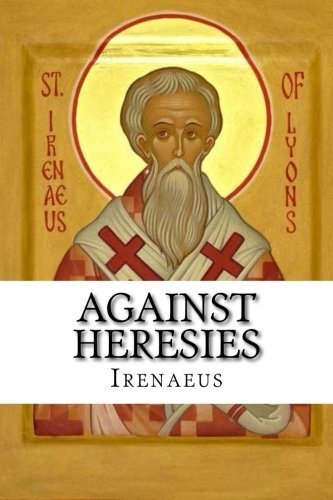
Around AD 180, Irenaeus wrote one of the most important works in early Christian history. Its common Latin title is Against Heresies (Adversus Haereses), but its fuller original title was something like:

“On the Detection and Overthrow of the So-Called Gnosis”

That phrase “so-called gnosis” is very important. The word gnosis in Greek means “knowledge.” But Irenaeus was not attacking ordinary knowledge or wisdom. He was attacking a movement later called Gnosticism — groups claiming to possess secret spiritual knowledge supposedly hidden from ordinary Christians.

What was Gnosticism?

Gnosticism was not one single religion but a family of movements mixing:

Many Gnostics taught ideas like:

Some even claimed:

This directly attacked core Christian beliefs:

So the conflict was enormous.

Why did Irenaeus write this work?

Irenaeus believed Gnostic teachers were confusing Christians and distorting the gospel handed down from the apostles. His goal was:

This is why the book became foundational in church history.

Why is Irenaeus especially important?

Irenaeus was not far removed from the apostles historically. His teacher was Polycarp. And Polycarp himself had known John the Apostle according to early tradition. So Irenaeus saw himself as defending the faith received from apostolic witnesses, not inventing something new. That connection gave his arguments enormous authority in the early church.

What does Against Heresies contain?

The work is large — five books total.

Book 1 — Description of Gnosticism
Irenaeus carefully describes Gnostic systems and myths. Some were incredibly elaborate: layers of heavenly beings called aeons, secret emanations, spiritual hierarchies, hidden cosmic dramas.
Ironically, modern historians know much about ancient Gnosticism because Irenaeus documented it so thoroughly.

Book 2 — Refutation
He attacks their logic and contradictions. He argues: their systems are speculative, inconsistent, disconnected from apostolic teaching, and often absurdly complicated.

Book 3 — Apostolic Tradition and Scripture
This is one of the most historically important sections. Irenaeus argues true Christianity is publicly preserved in churches founded by the apostles. He appeals to: apostolic succession, public teaching, Scripture, and the continuity of church doctrine.
This is where he famously points to the church in Rome as an important witness to apostolic continuity. This section became hugely influential later in Catholic and Orthodox theology, though Protestants also value his emphasis on apostolic teaching and Scripture.

Book 4 — Unity of Old and New Testament
Gnostics often rejected the Old Testament God. Irenaeus argued strongly: the Creator is the true God, the Old and New Testaments are united, Christ fulfills the Old Testament rather than abolishing it.
This became foundational for Christian biblical theology.

Book 5 — Resurrection and Final Salvation
Irenaeus defended: bodily resurrection, the goodness of creation, the future renewal of the world.
This was a direct challenge to Gnostic hatred of the physical world.

One of Irenaeus’ biggest ideas: “Recapitulation”

Irenaeus taught that Christ is the “new Adam.” He believed Jesus “recapitulated” humanity — meaning Christ retraced and corrected human history.
Very roughly:

This idea deeply influenced later Christian theology.

Why is this work historically important?

It is hard to overstate its importance.

1. It helped define Christian orthodoxy
Irenaeus helped clarify: who Jesus is, what salvation means, the authority of Scripture, the unity of the Bible, and the goodness of creation. Many later doctrines developed along lines he defended.

2. It preserved early Christian theology
His work gives historians a window into what mainstream Christians believed in the late 2nd century.

3. It preserved information about Gnosticism
Without Irenaeus, much ancient Gnostic teaching would be lost. Ironically, one reason we know Gnosticism so well is because its opponents documented it.

4. It contributed to the formation of the New Testament canon
Irenaeus strongly defended the authority of the four Gospels: Matthew, Mark, Luke, John. He opposed groups creating alternative secret gospels. This helped stabilize the church’s recognition of authoritative apostolic writings.

Why does this still matter today?

Many scholars and theologians see recurring “Gnostic-like” tendencies even today: treating the body as unimportant, viewing matter as evil, seeking secret spiritual knowledge, separating “spiritual” life from physical reality, redefining Jesus mainly as a hidden teacher of enlightenment.

Irenaeus’ response still shapes Christian theology: creation is good, salvation is public, not secret, Christ truly became human, redemption includes the body and creation.

Important historical connection

Irenaeus stands in a major chain of early Christianity:

John the Apostle → Polycarp → Irenaeus

That continuity is one reason church historians pay such close attention to him.

OSRHOENE & EDESSA

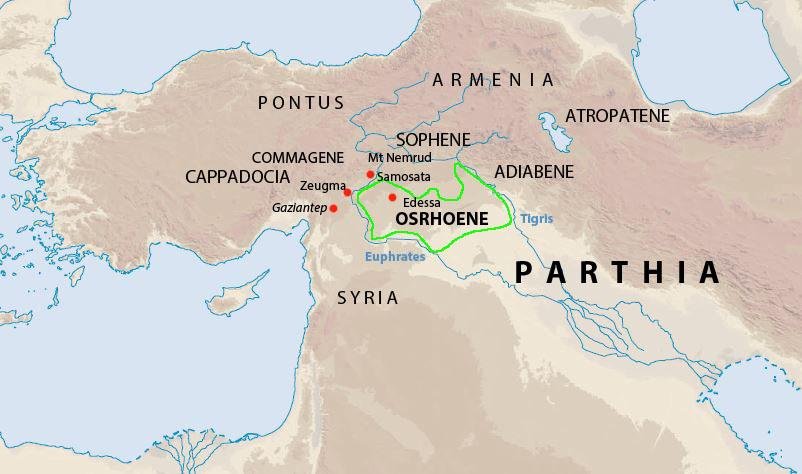
Osrhoene

Osrhoene was a small kingdom in Upper Mesopotamia whose capital was Edessa. In church history, it is remembered because many historians regard it as the first kingdom or state to officially embrace Christianity around the late 2nd century, often dated around c. 190–201 under King Abgar VIII.

Its importance is much larger than its size. Osrhoene became one of the earliest centers where Christianity moved from being a persecuted minority movement into a publicly recognized religion connected with political authority.

Osrhoene Details

It predates Constantine and the Roman Empire’s conversion

Most people think Christianity first became accepted when Constantine the Great legalized Christianity in the Roman Empire through the Edict of Milan. But Osrhoene was earlier by more than a century.
That means Christianity was already influencing governments before Rome officially tolerated it.
This is one reason Osrhoene is significant: it shows Christianity spreading eastward and developing independently of Roman imperial power.

Edessa became a major intellectual center of Christianity

Edessa became one of the great centers of Syriac Christianity. Syriac was a dialect related to Aramaic — the language environment closest to what Jesus and the apostles spoke.
This produced an important Christian tradition distinct from the later dominant Greek and Latin traditions.

From Edessa came:

One of the most famous Syriac Christian writers connected with this tradition is Ephrem the Syrian.

The “Abgar legend”

A famous early Christian tradition says King Abgar of Edessa exchanged letters with Jesus Himself and was healed after believing in Him. This story appears in later Christian writings like the Doctrine of Addai and is mentioned by Eusebius of Caesarea.
Most modern historians do not think the letters are historically authentic. But the legend itself is important because it shows how ancient Christians viewed Edessa as an especially early and honored Christian kingdom.

Christianity spread east, not only west

A common mistake in church history is thinking Christianity spread mainly toward Europe. Osrhoene reminds us that ancient Christianity was also deeply eastern.
Through Syriac Christianity:

So Osrhoene became part of the foundation for Eastern Christianity.

It helped shape Syriac theology and worship

The Syriac tradition emphasized:

This influenced later Eastern Christian spirituality deeply.

Historically, Osrhoene also sat between two great powers:

Because of this, Christians there often lived under political pressure from both sides, which shaped their theology of suffering and endurance.

One important clarification: historians debate the exact meaning of “first Christian state.” Some argue Armenia was the first officially Christian nation because Armenia formally adopted Christianity as state religion around 301 AD under Tiridates III. Osrhoene is earlier, but the evidence is less complete and more debated.

Still, nearly all church historians agree Osrhoene and Edessa were among the earliest and most influential Christian kingdoms in history.

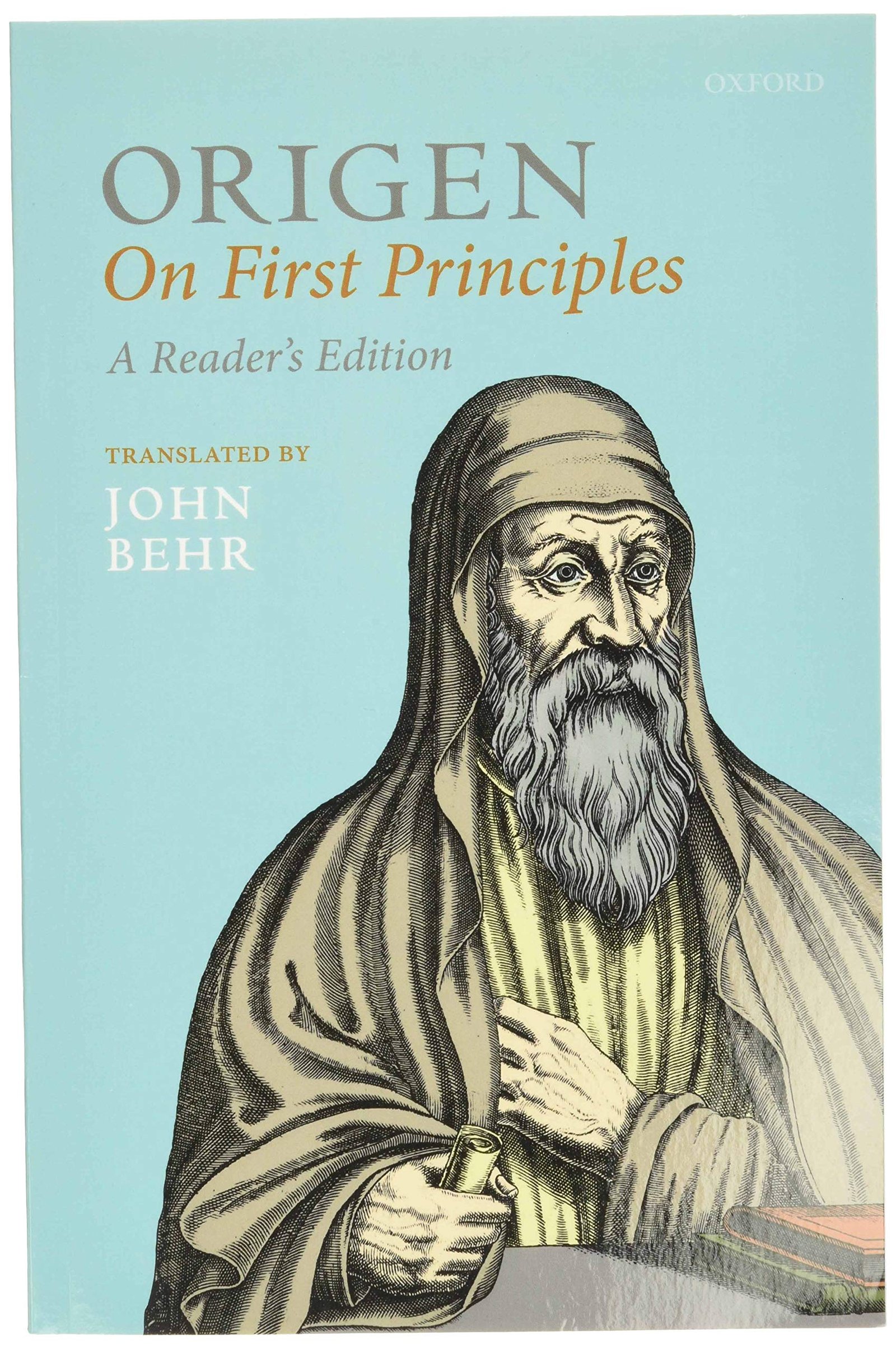
ON FIRST PRINCIPLES

On First Principles

Written by Origen of Alexandria around AD 230, On First Principles (Latin: De Principiis) is widely recognized as the first ever systematic theology of Christianity.

What makes it significant?

Before this work, Christian writings were mostly letters, apologies defending the faith, or arguments against specific heresies. Origen attempted to bring all Christian doctrines together into one coherent, philosophical system.

Multiple Meanings of Scripture

Origen emphasized that Scripture has layers of meaning, much like a human being consists of body, soul, and spirit. He taught three levels of interpreting the Bible:

Defense of Free Will

A major focus of the book is defending human free will against fatalism and determinism (often taught by Gnostics and certain Greek philosophers). Origen argued that humans are completely morally responsible for their actions and capable of responding to God's grace.

Speculative Theology

Origen was brilliant but highly speculative. In this work, he explored ideas that were later deemed controversial, such as:

Because of these highly speculative views, Origen was officially condemned as a heretic three centuries later at the Second Council of Constantinople in AD 553, though his intellectual contributions remain foundational to Christian theology.

STUDY PERSONS

Select a key historical figure to review their biography.

BIOGRAPHY

Player: ---
Knowledge: 0 History: 0
Loading question...

SESSION COMPLETE

You have answered all available history questions for this session!